🌋VOLCANO🌋
What is a Volcano?
Volcanoes are some of the most interesting features in Earth, they are basically ruptures in the Earth's crust which allow magma to flow upwards. If you want to understand volcanoes, you have to understand tectonics. The surface of our planet is not one big piece - it is broken into 17 major, rigid tectonic plates, that move one in relationship to the other. These tectonic plates "float" on a hotter, softer layer in the Earth's mantle. When that very hot and viscous layer comes up towards the surface its called "magma". Volcanoes on Earth are generally located in areas where the tectonic plates diverge or converge with each other. It's easy to understand if you look at a world map with the plate tectonics and volcanoes.
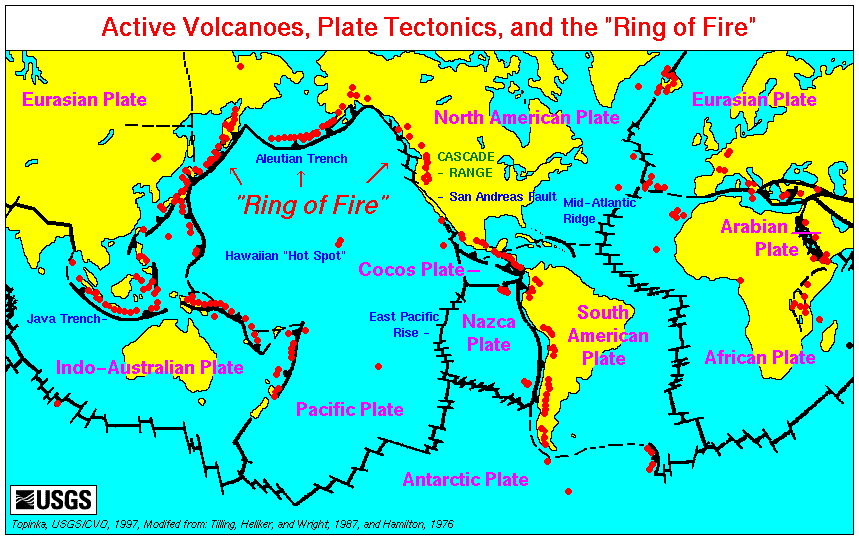
Basically volcanoes only form where there's a way for the magma ti migrate towards the surface - such as plate discontinuity or an area where the crust is very thin. There are also so - called "hotspot" - areas where the underlying mantle is much hotter than in other areas, either due to mantle plumes or lithospheric extension ( its not clear yet which of the two theories is correct ). Examples of hotspots include Hawaii and the Portuguese island of Madeira, but for the most part, volcanoes lie at the edge of tectonic plates.
Why does the magma rice to the surface?
The key word here is buoyancy. Magma is very hot, and therefore less dense than the surrounding rocks it simply rises due to a difference in buoyancy. This lighter magma rises toward the surface, and when its density is lower than the surrounding rocks, it flows towards the surface. But when the magma reaches the surface, another interesting thing happens.
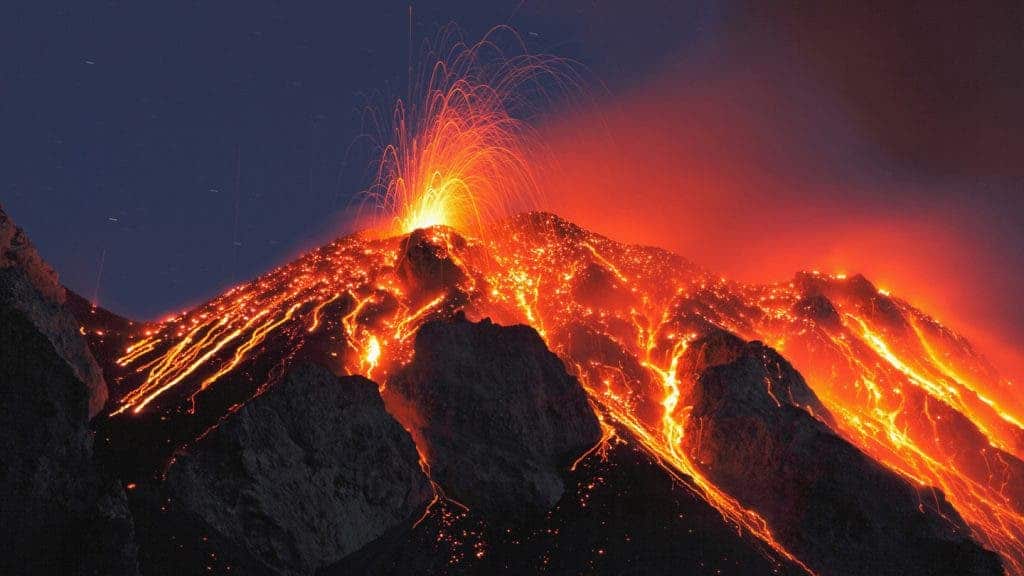
If the magma contains volatile elements ( water and/or gases ), when it reaches the surface, these volatiles will suddenly expand into steam and gas, causing a violent eruption. This tends to happen a lot of the magma is more acidic ( has a higher silica content ), with more basic magmas, there is usual a continuous, steady flow ( like in Hawaii )
So now that we know what a volcano is and why it forms, let's take a moment to "dissect one"
3 Types of Volcanoes
1. Stratovolcano
Stratovolcano consists of many layers (strata) of hardened lava, tephra, pumice, and volcanic ash. They generally have steeps slopes and are the most common type of volcanoes on Earth. However,, we haven't been able to find composite volcanoes anywhere else in the solar system, which the exception of Mars. These are the Hollywood volcanoes, the ones you see in all the movies.
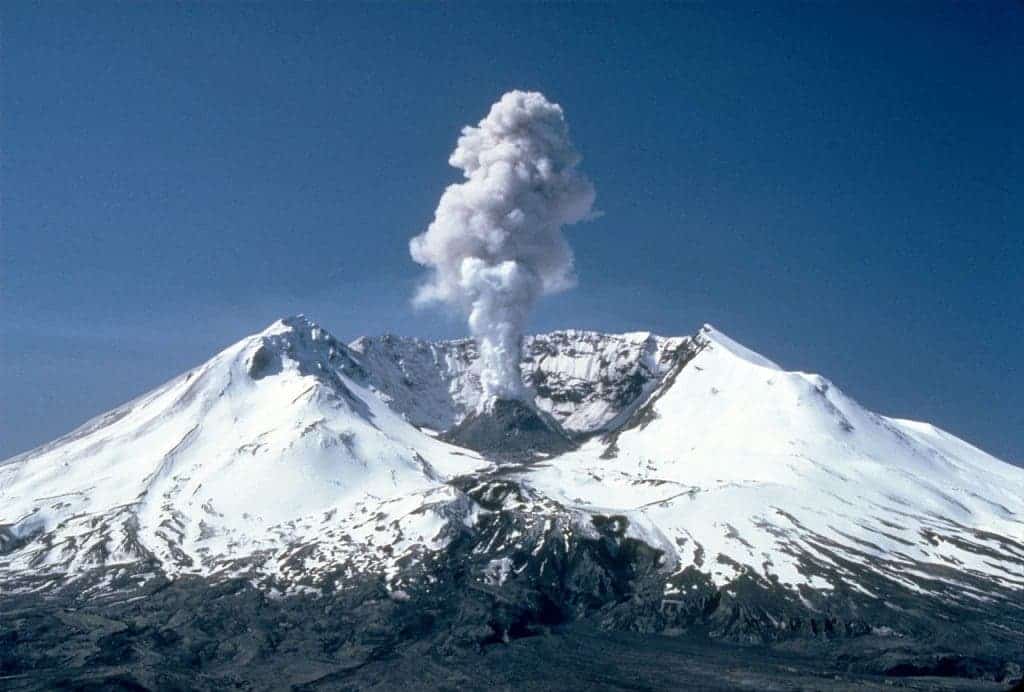
They tend to form at subduction zones (where one tectonic plate is sliding beneath the other - the oceanic plate beneath the continental plate). Their eruptions are typically explosive and effusive; the magma is generally rich in volatiles because the magma rises as water trapped both in hydrated minerals and porous basalt rock of the upper oceanic crust is released into mantle rock of the asthenosphere above the sinking oceanic slab. This release of water pushes the magma towards the surface. The chemical composition of the magma is intermediate because it incorporates both basic (from the oceanic plate) and acidic minerals (from the continental plate)
2. Cinder Cone Volcano
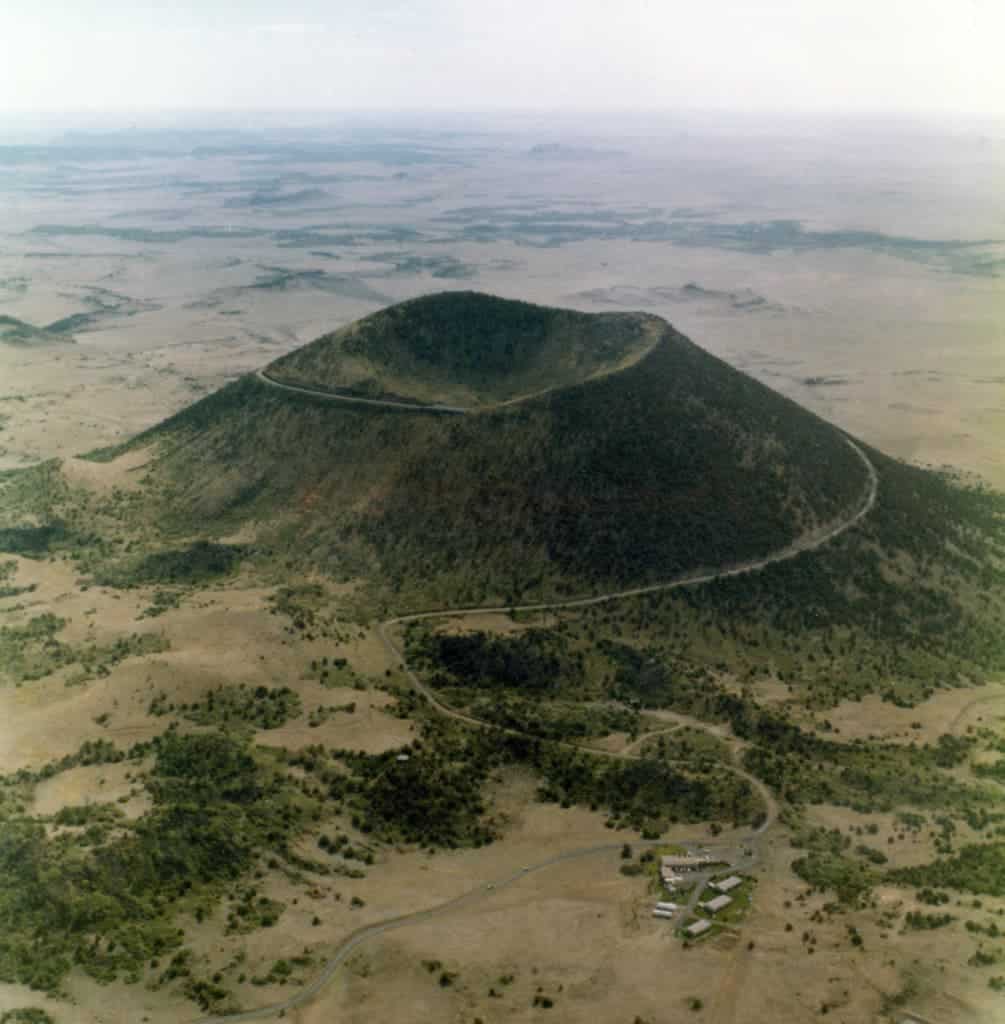
A cinder cone volcano is simply a steep conical hill of tephra (volcanic debris) that accumulates around and downwind from a volcanic vent. The cinder cone are made from pyroclastic material, which is pretty loose. Cinder cones are commonly found on the flanks of shield volcanoes and stratovolcanoes. Some Cinder cone are different than others, in that they only erupt once. However, even the ones that do erupt typically have a lower impact than stratovolcanoes.
3. Shield Volcano
A shield volcano is a type of volcano usually built almost entirely of fluid lava flows. They have very gentle slopes and are very developed horizontally. These are the classical Hawaii examples - steady flow and accumulation of lava leading to the shield - type formation. Mauna Loa a shield volcano on the pisland of Hawaii, is the largest single mountain in the world, rising over 30,000 feet above the ocean floor reaching almost 100 miles across at its base.
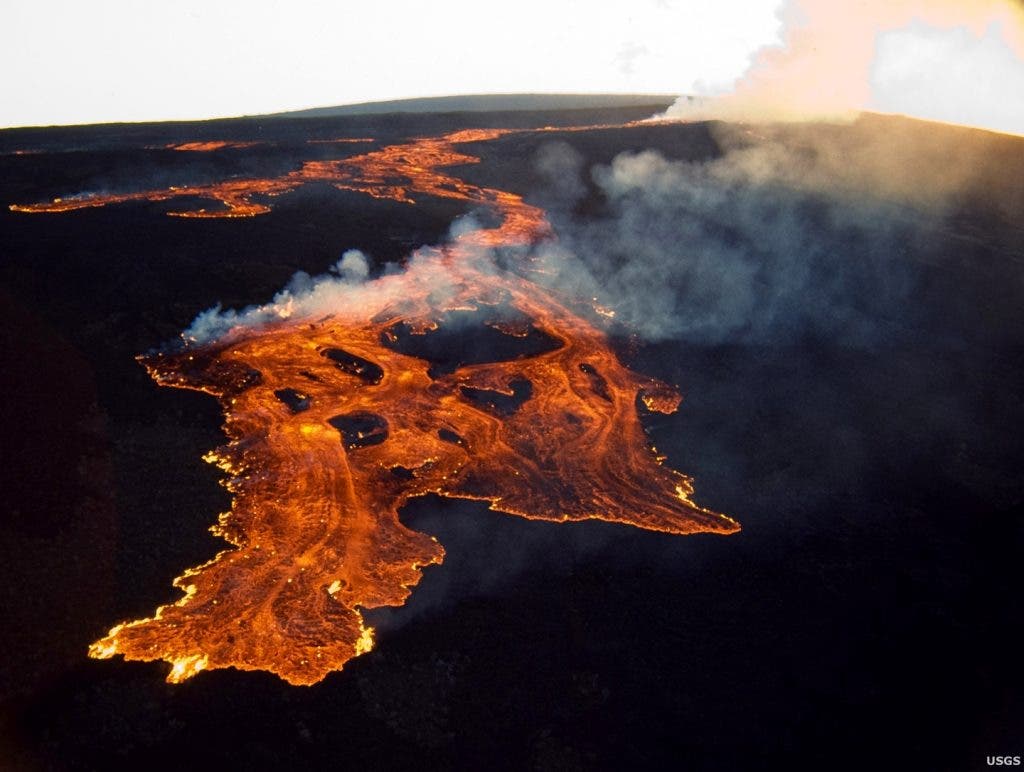
Shield volcanoes are built by effusive eruptions, which flow out in all directions. They almost never have violent eruptions, with basic lava simply flowing out. Although the term is generally ascribed to basaltic shields it has times been appended to rarer scutiform volcanoes of differing magmatic composition.
Most of what we know today about shield volcanoes comes from the study of the volcanoes in Hawaii. Hawaii lava generally has very high temperatures and low volatiles, and have many lava tubes. In Madeira (Portugal), the volcano is no longer active at the surface, and you can actually walk through the former lava tunnels
These are the main types of volcanoes.
Most of what we know today about shield volcanoes comes from the study of the volcanoes in Hawaii. Hawaii lava generally has very high temperatures and low volatiles, and have many lava tubes. In Madeira (Portugal), the volcano is no longer active at the surface, and you can actually walk through the former lava tunnels
These are the main types of volcanoes.

No comments:
Post a Comment
Note: Only a member of this blog may post a comment.